Baroness Riedesel: Eyewitness to the Revolution
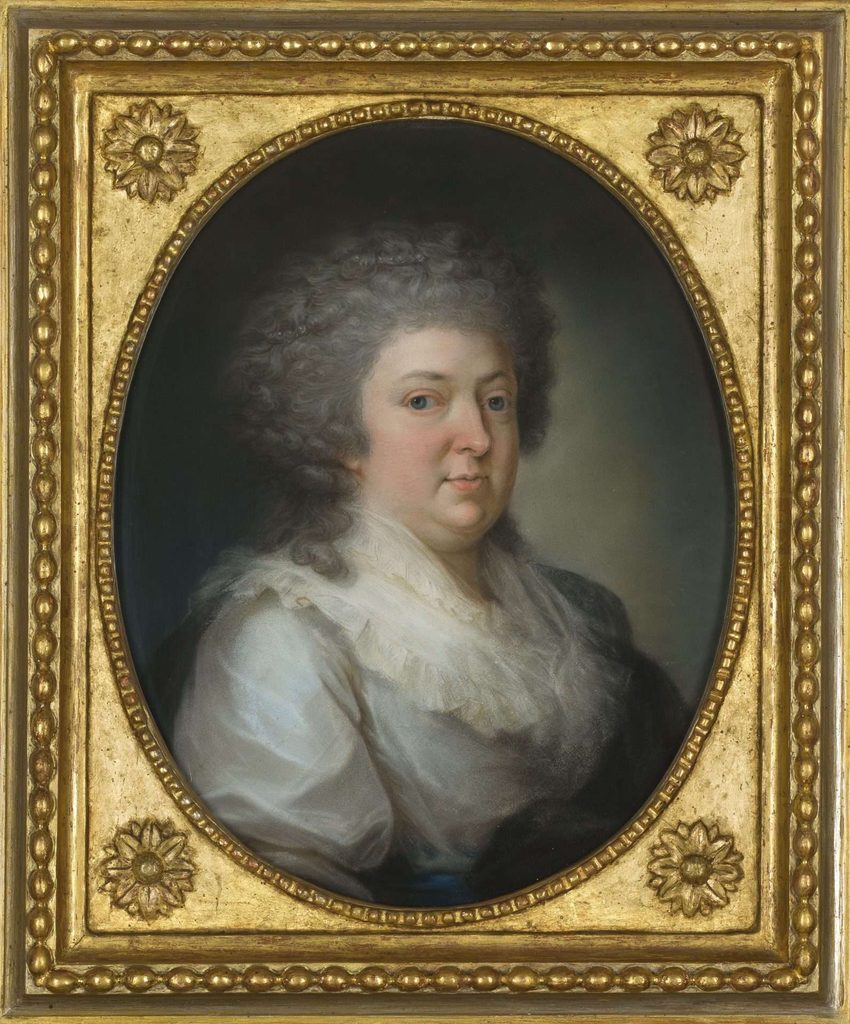
The Baroness Frederika Charlotte Riedesel was a prolific journalist and eyewitness to the American Revolution. Riedesel’s memoirs of her time with the German forces, published in 1800, provide a powerful primary-source account of the war.
Riedesel accompanied her husband, Brunswick–Lüneburg general Friedrich Riedesel, and their three children (Gustava, 6, Frederica, 3, and Carolina, 2 months) as he moved with the Hessian* forces during the American War of Independence.
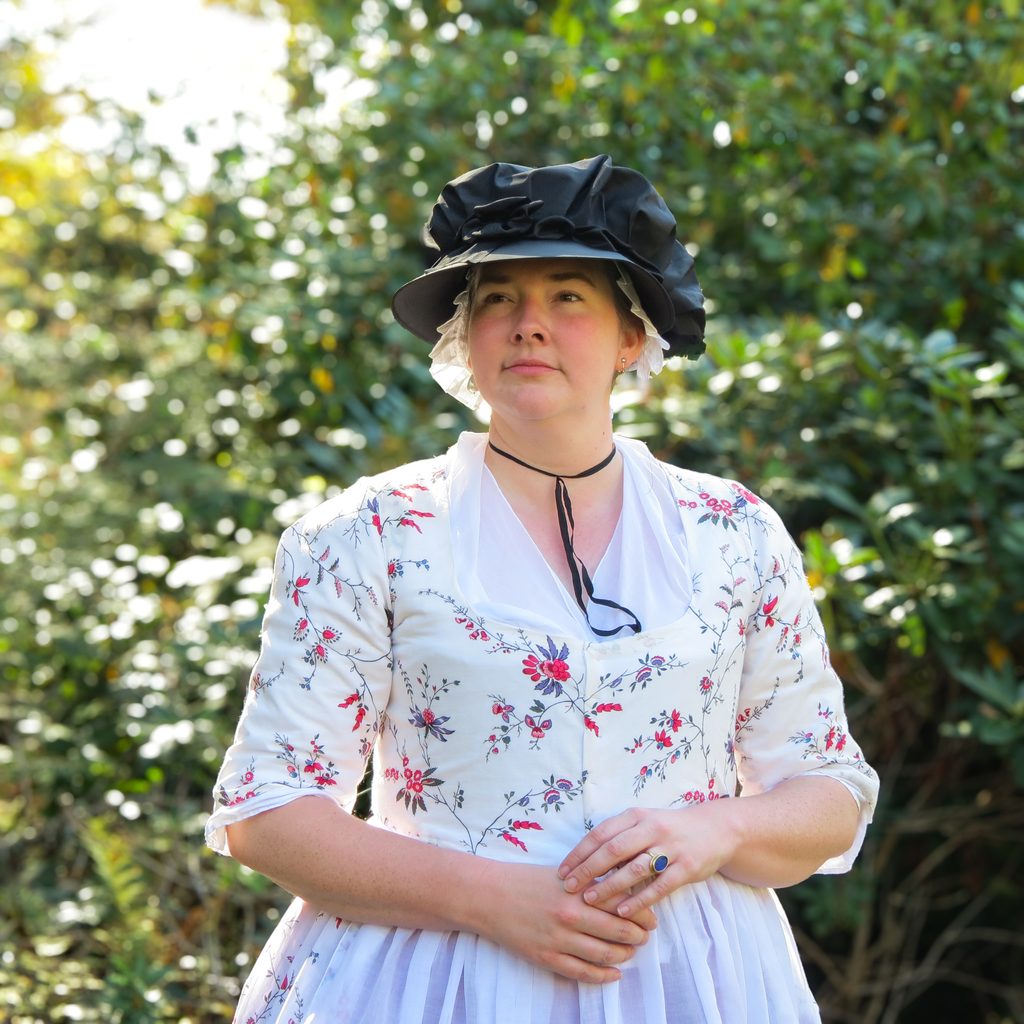
Emma Cross portrays Riedesel
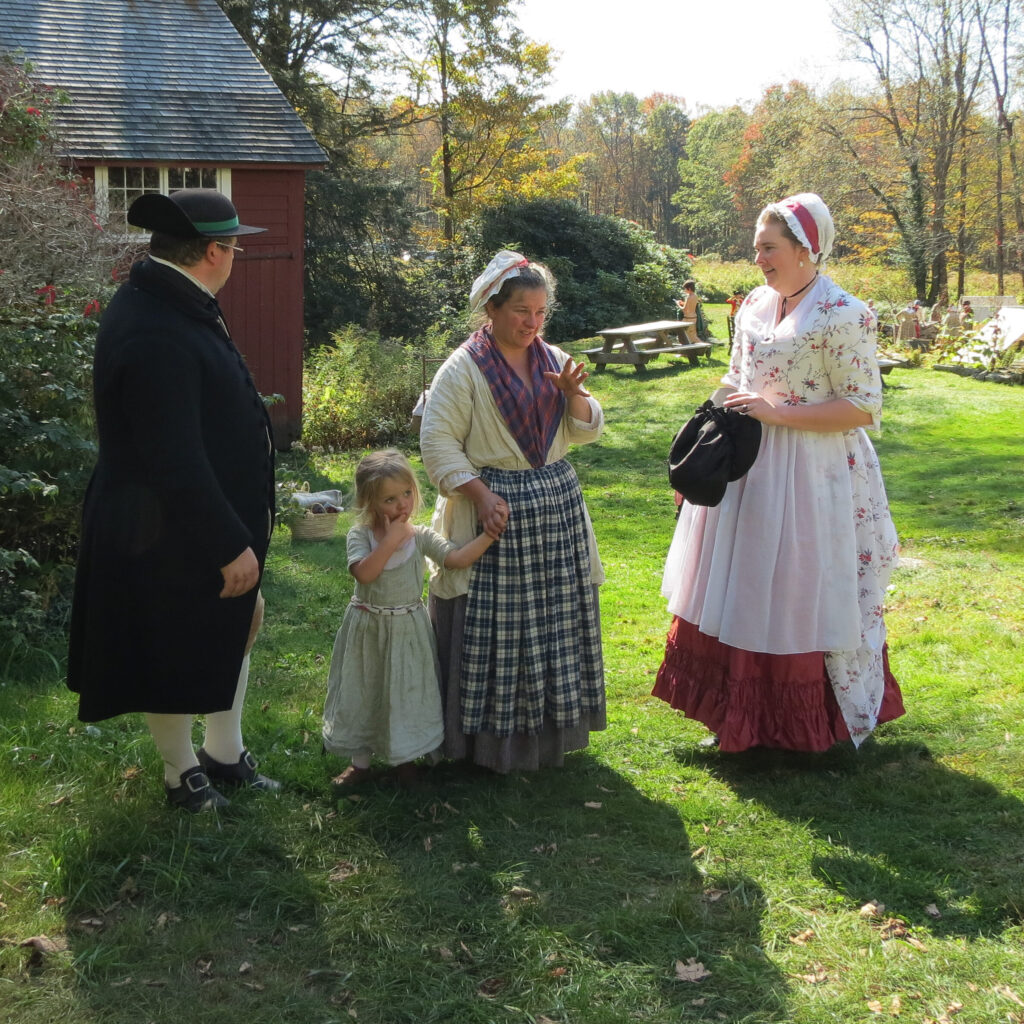
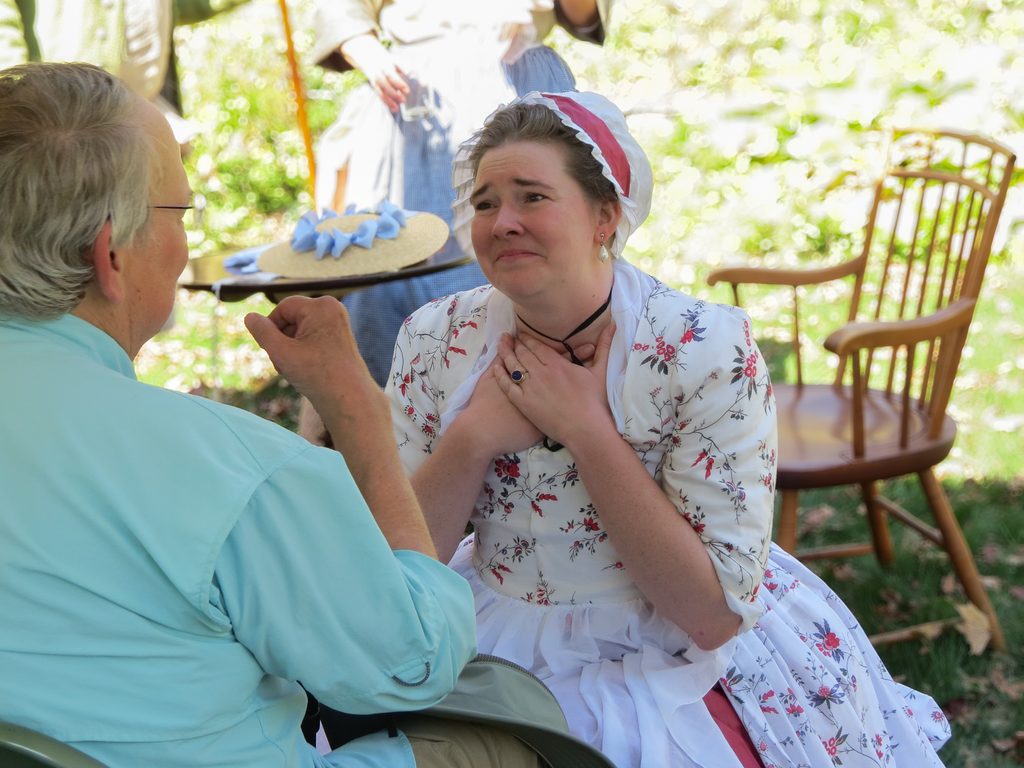
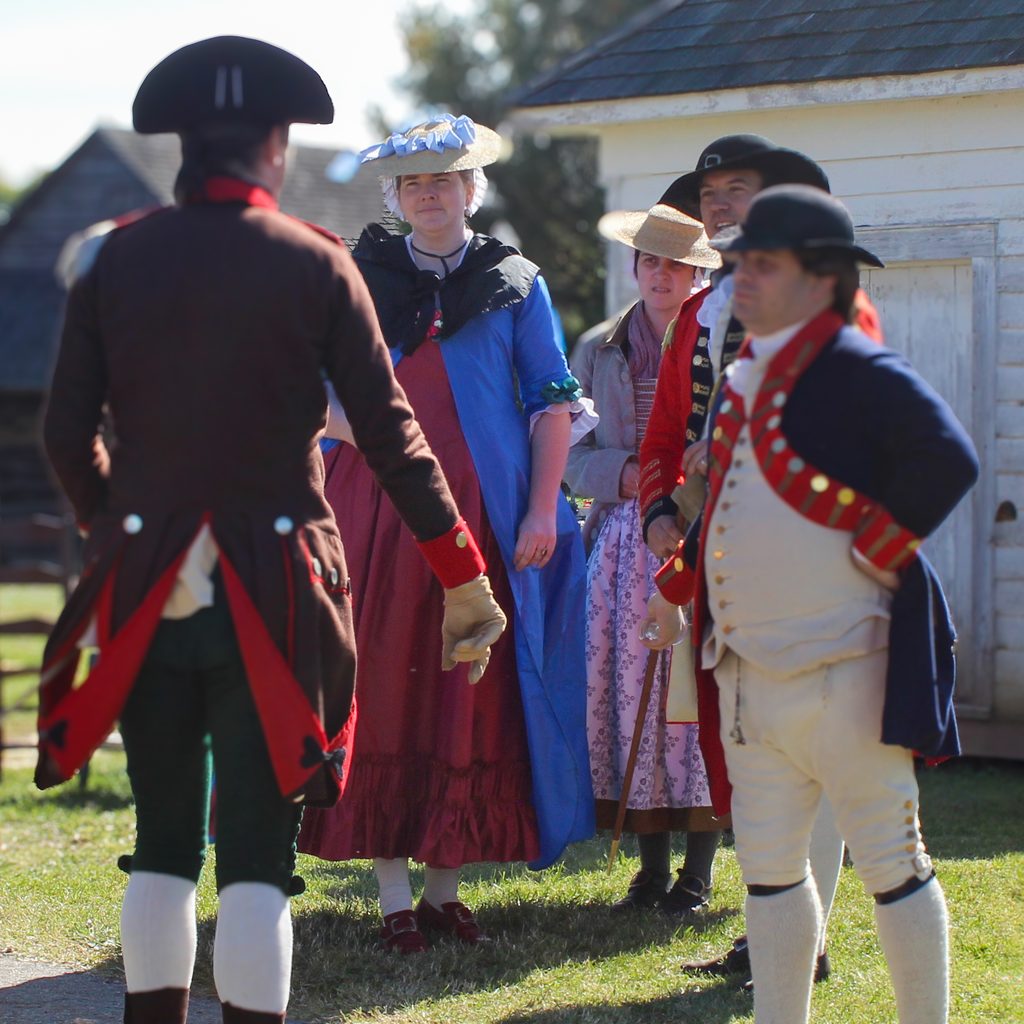
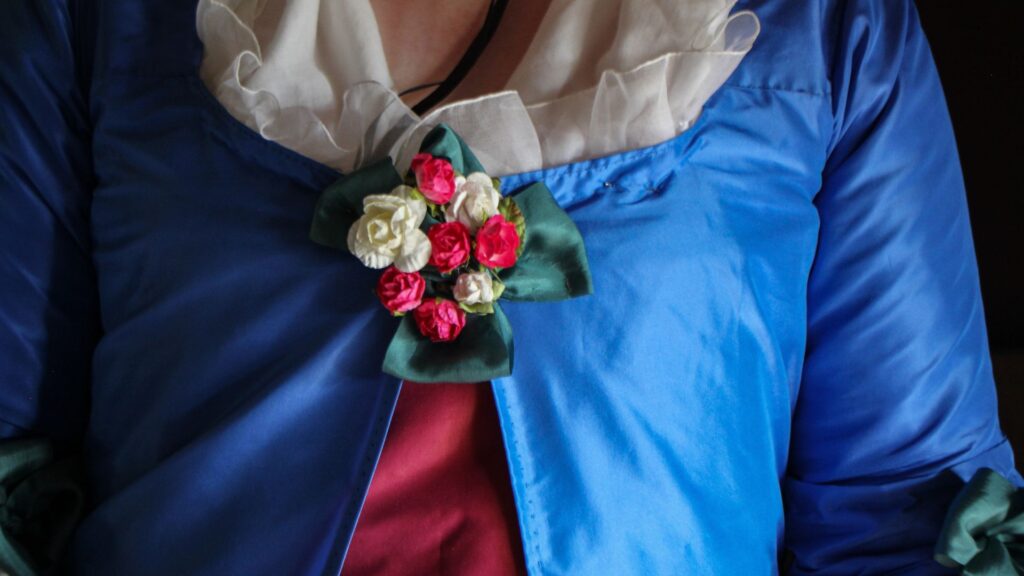
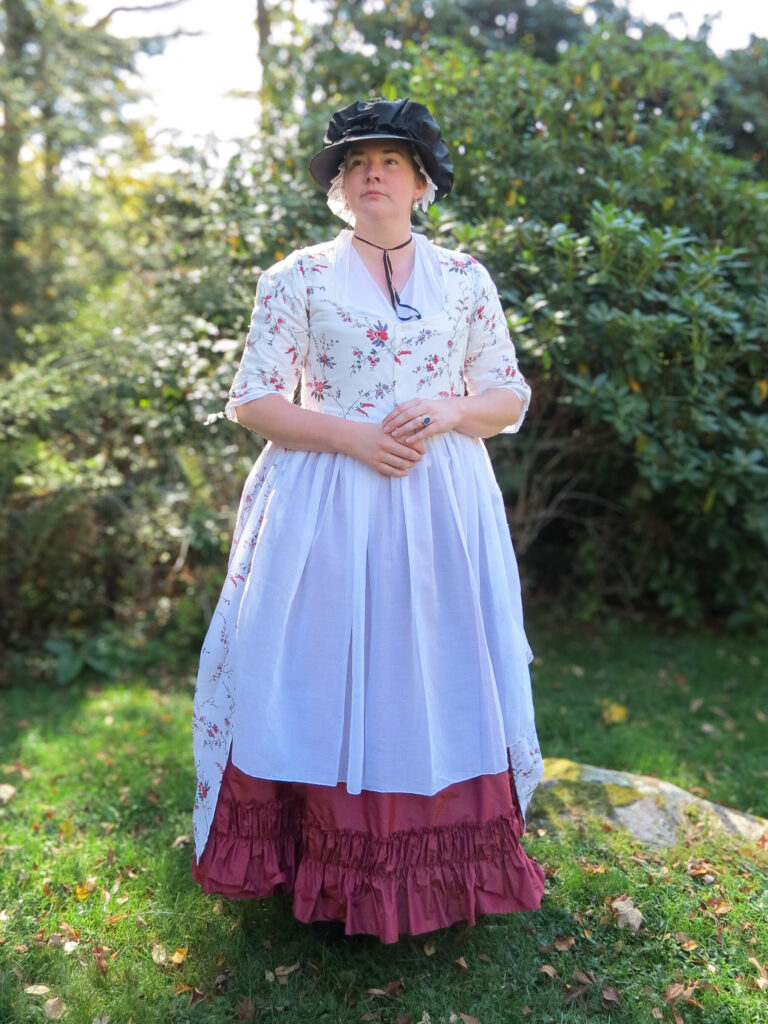
Reenactor Emma Cross of Meadow and Stars, LLC portrays Baroness Frederika Charlotte Riedesel and has given talks based on Riedesel’s memoirs at several reenactments.
While photographing Emma Cross’s portrayal of Riedesel, I was struck by her sensitivity and warmth, as she captured both the Baroness’ devotion to her young family and the grim realities of life on campaign. Her portrayal offers a personal, nuanced glimpse into how war shaped the lives of military families in the 18th century.
Baroness Riedesel at Army on Campaign
October 2025, the Bidwell House Museum (Monterey, Massachusetts) hosted its second Army on Campaign reenactment, portraying the lives of soldiers and followers during the American Revolution.
Army on Campaign featured tactical skirmishes and artillery demonstrations in the surrounding woodlands, along with British and Continental encampments, the army’s followers, and a tavern.
Riedesel documented life on campaign, including several battles, and chronicled the devastation of war. While evacuating with General Burgoyne’s army to Canada, she encountered the Battle of Saratoga. For several days, she sheltered in a cellar alongside other followers and wounded soldiers.
Baroness Riedesel at Captive Beyond the Mountains
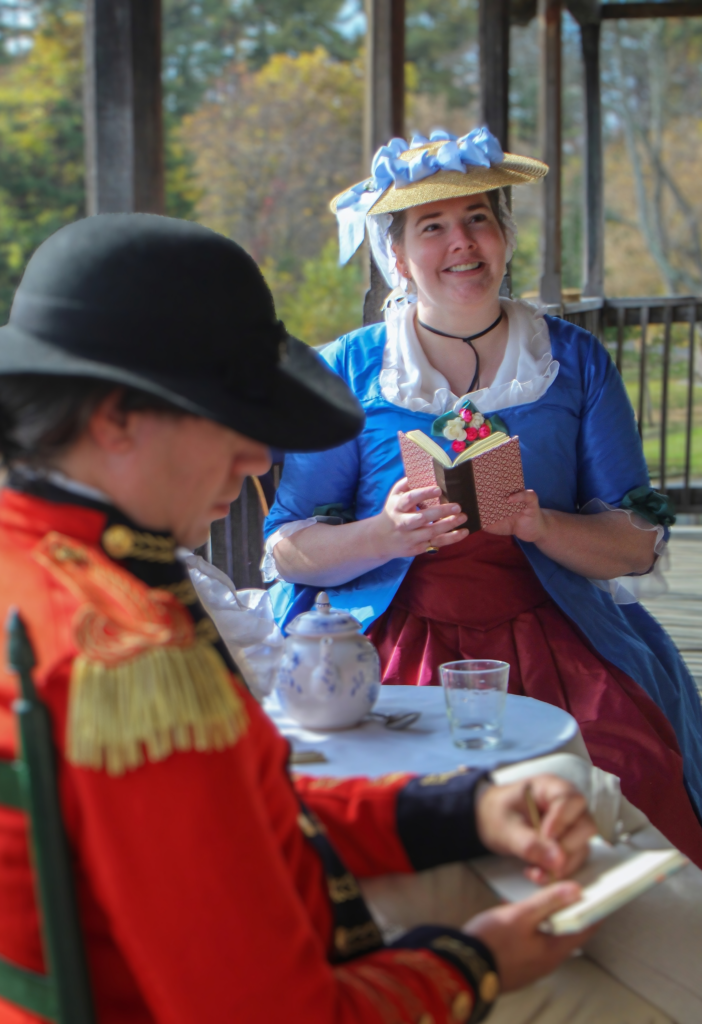
Cross also portrayed the Baroness Riedesel during the Frontier Culture Museum of Virginia‘s (Staunton, Virginia) Captive Beyond the Mountains weekend in October 2024.
After the pivotal American victory at the Battle of Saratoga in 1777, Riedesel and her children became the guests of General Philip Schuyler (of Hamilton fame). The family hoped to return to Germany but instead spent four years with the thousands of British and German prisoners of war known as the Convention Army in western Virginia.
By 1779, Congress allowed the Riedesel family to move to New York City. In the spring of 1780, Riedesel delivered a fourth daughter, Amerika. The next year, Congress allowed the family to travel to Sorel, Quebec. There the Riedesels had a fifth daughter, Canada, who lived only five months.
Baroness Riedesel’s Life after the American Revolution
After the war ended in 1783, Congress allowed the Riedesel family to return to Germany. Riedesel had two more children, a boy, Georg, in 1785, and a final daughter, Charlotte, in 1788.
After additional campaigns with her husband in the Netherlands, Riedesel wrote and published her memoirs of the Saratoga Campaign in 1800. She died eight years later, at 61.
I saw the whole battle myself, and, knowing that my husband was taking part in it, I was filled with fear and anguish and shivered whenever a shot was fired…
*Were they Hessian Mercenaries?
Historians are moving away from calling the German forces who fought for Great Britain “Hessians” or “mercenaries”. Although Americans used this language in previous decades, this interpretation distorts the German forces’ actual role during the American Revolution. Simply put, “mercenary” misrepresents the disposition of individuals who made up the forces.
German soldiers served as auxiliaries to the British Army in several major 18th-century wars, most notably the American Revolutionary War. In the 18th century, Germany was not unified, but a geographic and cultural region made up of hundreds of independent states. Each state required male citizens to become professional soldiers and serve in its national army.
To raise the troops needed to fight the Continental Army, King George III contracted additional soldiers from the most militarized European state, Hesse-Cassel. (The catch-all term “Hessians” derives from the fact that 65% of soldiers came from the German states of Hesse-Kassel and Hesse-Hanau.) Eventually, the demand for soldiers led many German states to conscript unfortunate travelers, criminals, and other ‘undesirables’.
It was the Landgrave (sovereign) of Hesse-Cassel who benefited from the troops’ deployment, not the individual soldiers.